Jimi Hendrix: Are You Experienced? - A Revolution in Six Strings
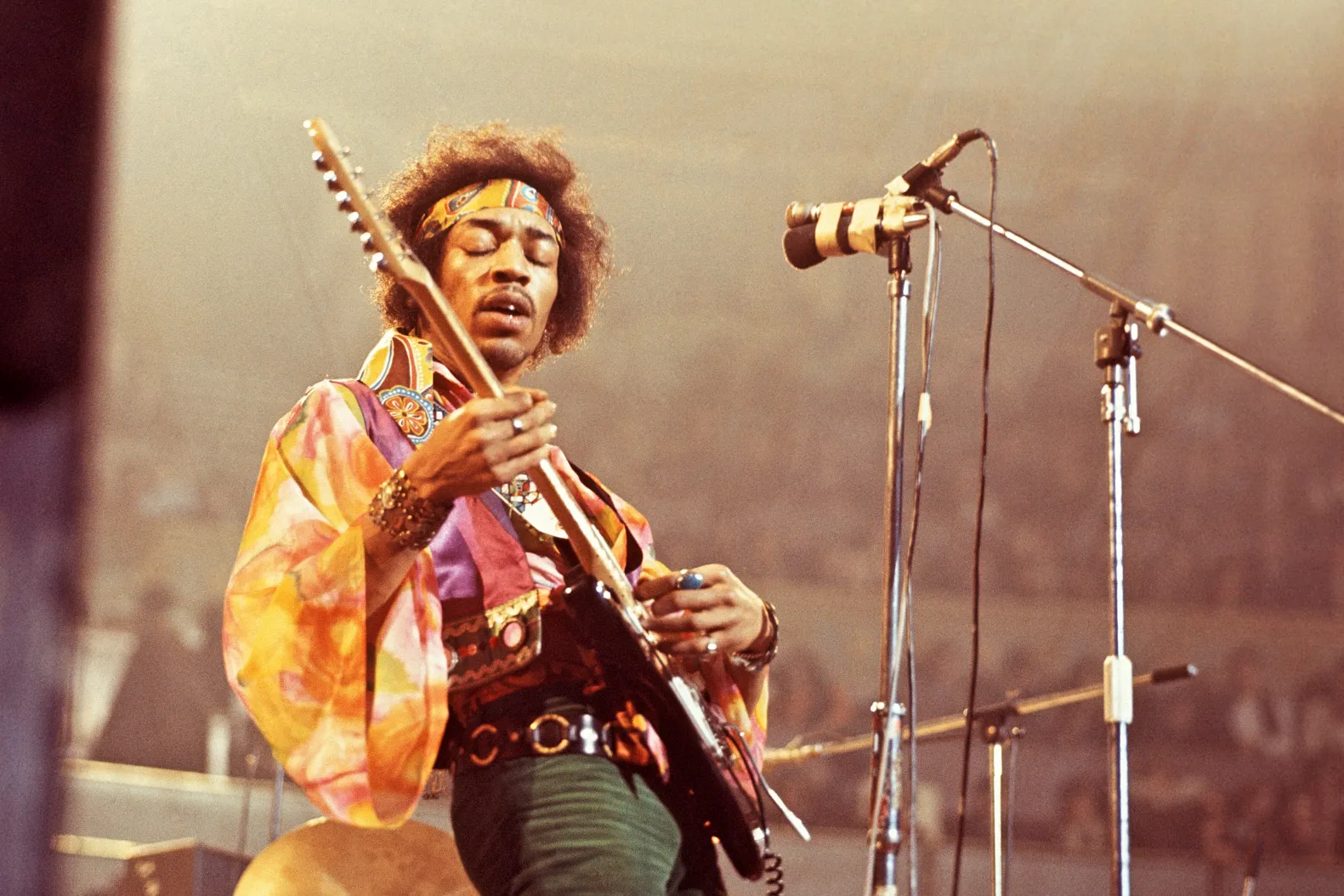
The first time the needle drops on “Are You Experienced?” is like being hit by lightning. In 1967, when young guitar players across America were still figuring out basic blues licks, here comes Jimi Hendrix: exploding onto the scene with sounds nobody had even imagined possible from an electric guitar. His debut album wasn’t just music; it was a declaration that everything about rock had changed forever.
The Visual Gateway
There’s something immediately captivating about the album cover. The fisheye lens distorting the band members, the purple and yellow color scheme, and that psychedelic font choice, it all perfectly sets the stage for what you’re about to experience. It invokes a sense of awe and intrigue, with the disfigured, morphing imagery serving as the perfect visual companion to the sonic journey within. Before you hear a single note, the cover tells you: prepare to have your perception altered.
The Experience
Listening to “Are You Experienced?” makes me feel like I need to own a guitar. And some shrooms. And some acid. And be at a park, close my eyes, and let this album take me where it needs to, okay?
While listening, I feel like I need to do a line of coke to get my day started, you feel me? Some songs are more mellow, like a weed high. Others hit with the intensity of that first cup of coffee when it finally kicks in and your brain starts firing on all cylinders. I like this emotional rollercoaster; it’s not monotonous, but rather a journey through different states of consciousness.
The album progresses with an intentional flow that takes you through these various mental landscapes. This isn’t just a collection of songs, it’s a cohesive work with a narrative arc that explores themes of experience in all its forms: LSD, love, sex, mental health (depression and BPD), and experiencing life to its fullest extent. At a time when America was questioning everything about authority and reality itself, Hendrix provided the perfect soundtrack for the revolution happening in young minds.
Musical Mastery
The guitar stands at the forefront of the mix, which is no surprise given Hendrix’s legendary status. When he unleashes that iconic wah-wah effect in “Foxey Lady,” it sounds like a spaceship communicating with Earth. The backwards guitar solos and feedback he pioneered weren’t just technical showboating, they expressed emotions that conventional playing couldn’t touch.
The drums, masterfully handled by Mitch Mitchell, are really nicely done as well, with jazz-influenced fills that dance around Hendrix’s playing rather than just keeping time. And Jimi’s voice is hypnotising and effortless. His vocal style is reminiscent of someone in a trance, perhaps on a mind-altering substance and just feeling the music flow through him. That’s not to say that I think he was high during recording, just that that is what it feels like: a man channeling something beyond himself.
What makes this album truly special is its rhythm, melody, and harmony. It’s very free-flowing, an ebb and flow of dissonant and harmonic elements. When Purple Haze opens with that tritone (the “devil’s interval”), it’s an immediate signal that this music operates by different rules. Pure consciousness translated into sound.
Cultural Earthquake
To understand the impact of “Are You Experienced?”, you need to picture the musical landscape of 1967. The Beatles had released “Sgt. Pepper’s,” psychedelia was blooming, and the Summer of Love was transforming youth culture. But even in this experimental context, Hendrix was alien territory.
White America was still getting comfortable with blues-based rock when Hendrix, a Black man who played guitar with his teeth and set instruments on fire, completely rewrote the rulebook. His innovative use of feedback, wah-wah pedals, and studio effects created sounds that seemed to come from another dimension. While his contemporaries were using technology to refine their sound, Hendrix was using it to deconstruct reality itself.
Production Excellence
The production quality strikes a perfect balance between raw and polished. I wouldn’t call the audio compressed to hell and back, and it’s definitely not lo-fi either. It’s a happy medium between the two. Perfectly balanced, as all things should be. Producer Chas Chandler (former bassist of The Animals) knew exactly when to let Jimi’s experimentations fly and when to rein things in for maximum impact.
The instruments are positioned in the mix with the guitar taking prominence, followed by vocals, drums, and bass. The songs transition smoothly into each other, creating a seamless listening experience, especially on vinyl. For an album recorded in 1966-67, the sonic clarity is impressive. You can hear every nuance of Hendrix’s revolutionary playing.
Standout Tracks
After multiple listens, my top favorites have to be:
-
“Foxey Lady” - That teasing intro with the sustained note that builds tension before exploding into that riff is like musical foreplay. When the chorus hits and Hendrix drawls “Foxy,” you understand why this became an anthem of sexual liberation.
-
“Third Stone from the Sun” - This instrumental journey feels like floating through space. The whispered vocals and effects-laden guitars create a soundscape that other bands would spend entire careers trying to replicate. When the tempo shifts and the melody fractures, it’s like watching a kaleidoscope turn.
-
“Purple Haze” - From the first set of chords: very dissonant and draws you right in. When he sings “excuse me while I kiss the sky,” it’s not just a lyric, it’s an invitation to transcendence. The controlled chaos of the solo sounds like what I imagine synesthesia feels like.
-
“I Don’t Live Today” - The tribal drumming and Hendrix’s desperate vocals create an atmosphere of existential crisis that still feels relevant. When the feedback section hits halfway through, it’s like a musical panic attack: uncomfortable but cathartic.
-
“Manic Depression” - The groove in this one absolutely rocks. The waltz-time signature (unusual for rock) gives it a spinning, dizzy feeling that perfectly matches the lyrical theme. When Hendrix says he’s “knowin’ what I want to do,” his guitar speaks of both torment and freedom.
-
“The Wind Cries Mary” shows Hendrix’s softer side. It’s reminiscent of songs from “Electric Ladyland” and feels like it could fit right in there. It’s like coming down from a trip, when the world starts making sense again but still has a gentle glow around the edges.
Personal Connection
I don’t know if I’ve really listened to music like Jimi before. Growing up in a Jamaican Christian household, this was definitely not the kind of music played around me. My musical universe consisted of reggae, gospel, pop, nu-metal, K-Pop, and soul. Quite a diverse mix, but nothing that prepared me for the psychedelic guitar shamanism of Hendrix. Discovering this album feels like finding a missing piece in my understanding of where so much modern music came from.
I would definitely have another sit-down, full-length listen. It would need to be at least three or four more times to really embody the artistry in this work. To me, it’s an easy listening experience despite its complexity. All you have to do is let yourself be transported into the music. I wouldn’t recommend this album to every friend, but only to those I know who would appreciate it. I say this not in a pretentious sense, but genuinely. For many people, this might sound like just noise. But for those willing to surrender to the experience, it’s a doorway to understanding what makes great music transformative.
Final Thoughts
Knowing this is Jimi’s debut album makes it that much more captivating. To step onto the scene with this level of quality is insane; like watching a basketball player dunk from the free-throw line in their first game. As a side note, the different colour print on each side of the vinyl is a great little touch, though I’m not sure how recent that addition is.
For a debut album that changed the course of rock music forever, I give “Are You Experienced?” an 8.7/10. Over fifty years later, when most “revolutionary” albums of the era sound dated or quaint, Hendrix still sounds like he’s broadcasting from the future. This album didn’t just capture the spirit of 1967, it continues to offer new generations a blueprint for musical freedom and expression that remains as vital and electric as the day it was released. Listening to it today makes me wonder: have we even caught up to Hendrix yet?
Comments
Join the discussion on GitHub. Sign in with your GitHub account to comment.